

Ten years ago Tesla put a car on a stage that did not exist yet, asked for $1,000 to reserve one, and took 325,000 deposits in a week. The Model 3 went on to become the best-selling electric car ever built, and very nearly bankrupted the company on the way.
- 3M+delivered worldwide
- 10years since the unveil
- 325kreservations in week one
- 97%of Tesla deliveries are 3 or Y
The numbers behind the ramp
The interesting part is not the launch. It is what happened once the factories finally worked. Tesla went from its first profitable year in 2020 to a peak of over 1.7 million Model 3 and Model Y deliveries in 2023.
2023 remains the high point. Deliveries eased back afterwards as competition arrived and the Model Y took over as the bigger seller, but the platform still accounted for 97% of everything Tesla shipped in 2025.
The decade, year by year
Four distinct phases, from the reservation queue to three million cars.
2016-2017: the promise
A car that did not exist yet, and 325,000 people who paid to be in the queue.
-
Model 3 unveiled
Musk showed the car at the Hawthorne design studio as Tesla's first mass-market vehicle: $35,000, 215+ miles of range. Reservations opened in stores that morning and online at 10:30pm PT, on a refundable $1,000 deposit.
-
325,000 reservations in a week
Within seven days, over 325,000 people had put down deposits. That is roughly $14 billion of implied future sales, and the largest product pre-order in the history of the car industry.
-
First car off the line
Serial number 1 was built at Fremont. Musk announced it on Twitter ahead of the handover event.
-
The first 30 deliveries
Tesla handed over the first 30 cars at Fremont, all to employees. Musk called it the day Tesla became a real car company.
-
Production hell begins
Tesla delivered 220 cars in the quarter against enormous demand. Battery module production at Gigafactory 1 in Nevada was the bottleneck.
-
1,000 a week
Tesla passed 1,000 cars a week in the closing days of the quarter, finishing with 1,550 delivered. The targets were 2,500 a week by the end of Q1 and 5,000 by the end of Q2.
2018-2019: production hell
Building the thing turned out to be far harder than selling it.
-
5,031 in one week
Tesla built 5,031 Model 3s in the last week of June, using a tent-based assembly line in the Fremont car park that handled a fifth of the quarter's output. Musk emailed staff: "I think we just became a real car company."
-
First properly profitable quarter
Tesla posted $311.5 million of GAAP net income, driven by the Model 3, on 56,065 deliveries at positive gross margin.
-
Best-selling EV in America
Around 139,782 sold in the US. By Q4 it was outselling the BMW 3 Series to become the best-selling premium sedan in the country.
-
Shanghai breaks ground
Construction started on Tesla's first factory outside the US, in the Lingang area. It went from bare ground to building cars in under a year.
-
The $35,000 car, briefly
Tesla finally offered the promised $35,000 Standard Range with 220 miles of range. It appeared on the configurator for a short time before moving off-menu, orderable only by phone.
-
First China-built car delivered
Fifteen locally built Standard Range Plus cars went to employees, less than a year after construction started.
-
300,000 in a year
Roughly 300,885 Model 3s delivered worldwide, about 80% of everything Tesla shipped that year.
2020-2022: scale
Profitability, the S&P 500, and two million cars.
-
First full-year profit
$721 million of GAAP net income on $31.5 billion of revenue. Model 3 and Model Y together delivered 442,562 cars.
-
Added to the S&P 500
At roughly $659 billion, the largest company by market value ever added to the index at that point, on the back of four straight profitable quarters.
-
Best-selling premium sedan in the world
The Model 3 outsold the BMW 3 Series, Mercedes C-Class and Audi A4 globally, three and a half years into production and from two factories. Combined 3 and Y deliveries reached 911,242.
-
Two million built
Cumulative Model 3 deliveries passed two million, making it the best-selling electric car ever within five years of starting production.
2023-2026: maturity
The refresh, the peak, and life as the older sibling to the Model Y.
-
Highland arrives
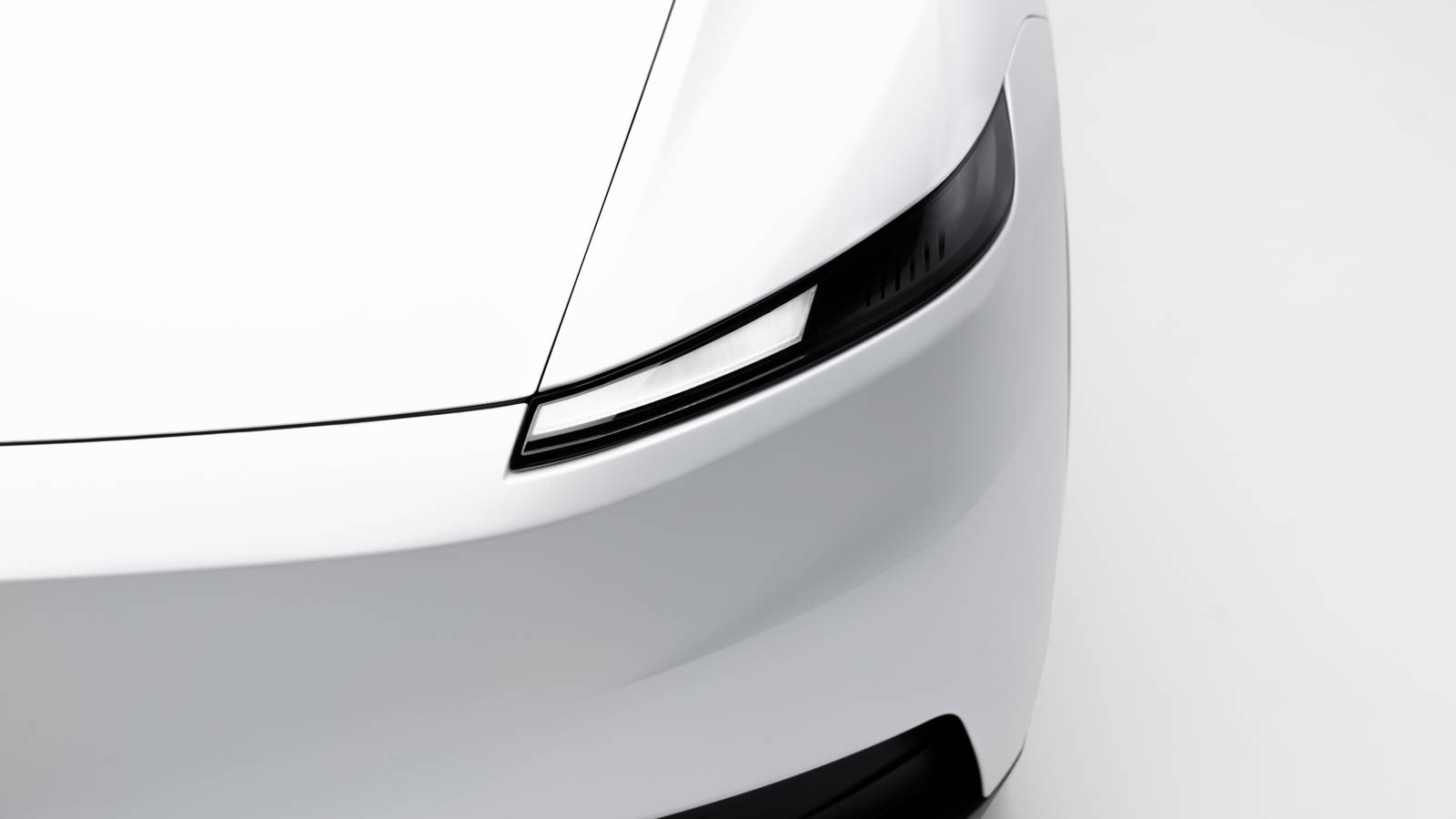
The mid-cycle refresh brought a new front end, redesigned headlights, a reworked interior and better sound insulation. China and Europe first, North America the following January.
-
The peak
Combined Model 3 and Model Y deliveries peaked at 1,739,707 on $96.8 billion of revenue. Model Y had overtaken the Model 3 as the bigger seller.
-
Highland reaches North America
Rear-wheel drive from $38,990 with 272 miles of range and 0-60 in 5.8 seconds; Long Range AWD with 341 miles and 4.2 seconds. Power trunk and revised suspension included.
-
Still carrying the company
An estimated 192,440 Model 3s sold in the US and 200,361 in China. Combined 3 and Y deliveries of 1,585,279 accounted for 97% of everything Tesla delivered.
-
Ten years since the unveil
A decade since the sheet came off a $35,000 electric saloon that did not exist yet.
-
Three million delivered
Tesla confirmed cumulative Model 3 deliveries had passed three million worldwide, with Shanghai still central to supply.
"I think we just became a real car company." Elon Musk, emailing staff the week Tesla built 5,031 Model 3s
What it changed
The Model 3 forced the rest of the industry to take electric cars seriously. It also paid for the Supercharger network and the manufacturing base that everything since has depended on. Whatever you make of Tesla now, the mass-market EV exists because this car sold in the numbers it did.