

When Tesla launched the Model Y Standard in October 2025 at $39,990, it renamed the old Long Range cars "Premium" and drew a much harder line between the two than the ~$5k gap suggests (they've since dropped the 'Standard' completely, which is now available as a RWD or AWD variant). To avoid confusion, we'll still refer to the lower-spec model as the 'Standard' Model Y. This is not a software-locked battery or a stripe delete; Tesla physically removed hardware, and a lot of it is hardware owners notice every single day.
Below is the equipment list, item by item, against the Premium Model Y. Prices are current as of August 2026: Standard RWD at $39,990 with 321 miles and 6.8 seconds to 60 mph, Premium RWD at $45,990 with 357 miles and 5.4 seconds, Premium AWD at $49,990 with 327 miles and 4.6 seconds, and Performance at $57,990 with 306 miles and 3.3 seconds.
| Item | Standard | Premium |
|---|---|---|
| Battery pack | 69 kWh | 78.1 kWh |
| Peak DC charging | 225 kW | 250 kW |
| Dampers | Passive | Frequency-dependent |
| TPMS | Indirect (software) | Direct sensors |
| Light bars / headlights | Deleted / plain LED | Fitted / adaptive matrix |
| Ambient interior lighting | No | Yes |
| Center console | Open, pass-through | Enclosed, sliding cover |
| Rear screen | None | 8-inch |
| Front seats | Heated only | Heated + ventilated |
| Front door glass | Tempered | Double-laminated acoustic |
| Audio | 7 speakers, no sub | 15 speakers + sub |
| Air filtration | Particulate + odor | HEPA + Bioweapon Defense |
| Frunk | Fabric liner, no seal | Waterproof rubber, sealed |
Drivetrain and battery
The Standard runs a 69 kWh pack against 78.1 kWh in the base Premium. Peak DC charging drops from 250 kW to 225 kW. Tesla does not publish motor power or torque figures for the Standard, so the acceleration numbers are all you have to go on.
Suspension is passive dampers rather than the frequency-dependent dampers fitted to Premium. Tire pressure monitoring is indirect, calculated in software, instead of direct sensors in the wheels. That last one matters if you swap wheels: no sensors to transfer, but also no per-corner pressure readout.
The Standard rides on new 18-inch wheels with full-face aero covers, closer in look to the Cybertruck covers than the old Gemini design. The 321-mile figure is achieved on those 18s.
Lighting, inside and out
Customizable ambient interior lighting is gone. Premium has it, Standard does not. There's no puddle lights in the doors, but the Standard model does retain the front footwell lights.
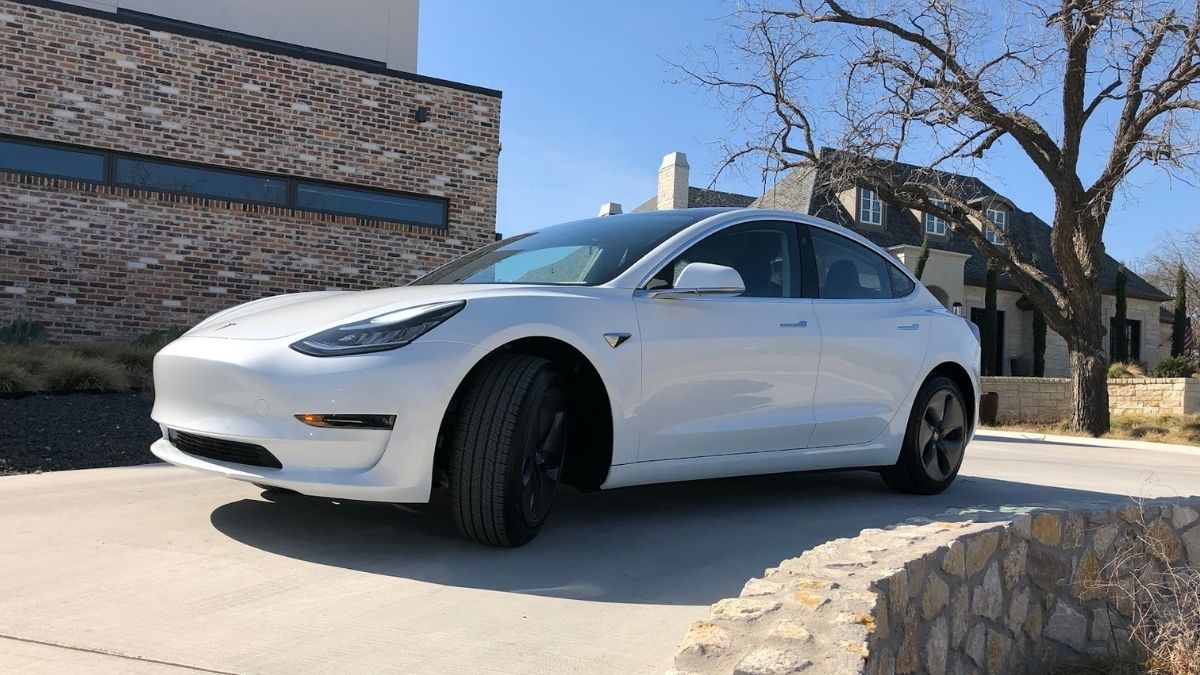
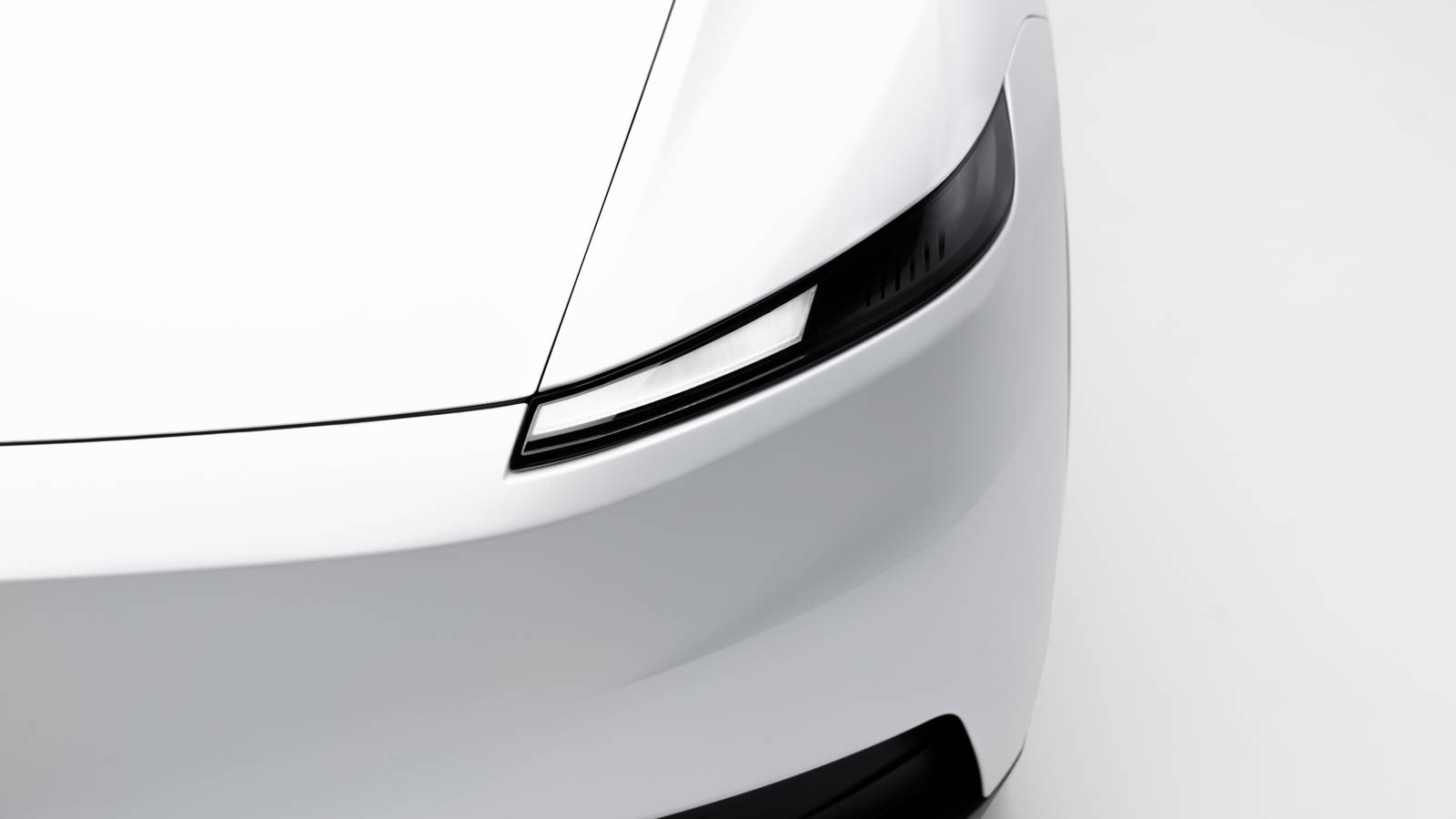
Outside, the front and rear light bars are deleted on the Model Y Standard, and the headlights are plain LEDs without the adaptive matrix function. Visually that is the quickest way to spot one in traffic, and anecdotal comments on various social media channel tend to show that a lot of people either like, or even prefer, the look of the front-end.

Interior and storage
The enclosed center console with its sliding cover is replaced by an open, Cybertruck-esque console with a pass-through and floor storage. Closed storage is minimal, as is the overall aesthetic. Competitors are adding storage options in every nook and cranny, so anyone with a family might miss some of the usual hiding places for the important 'stuff'.
The 8-inch rear passenger screen is removed entirely, and the rear vents are manual rather than screen-controlled.
Seats: front seats are heated but not ventilated, and the rear seats are neither heated nor powered. The side seat-adjustment buttons are deleted, with adjustment moved into the touchscreen. Trim is textile rather than microsuede, and the seats themselves are textile plus vegan leather.
The steering wheel is manually adjustable, though the heated wheel survives. Mirrors are still powered for aim but lose power folding and auto-dimming.
Color choice narrows too: grey, white or black outside, black only inside.
The roof is the odd one
The Model Y Standard keeps the glass roof panel externally, but at launch it was fully covered on the inside by a fabric headliner. Tesla's reasoning was HVAC efficiency. The Model 3 Standard, by contrast, keeps its open panoramic glass. Since June 2026 the black headliner has been applied across the whole US Model Y lineup, which muddies the picture, so treat the roof as something to confirm on the car in front of you.
Noise, air and audio
The front doors use standard tempered glass instead of the double-laminated acoustic glass on Premium. Cabin noise is higher as a result. Worth noting that the Model 3 Standard does keep acoustic front glass, so this is a Model Y-specific cut.
Audio drops to 7 speakers with no subwoofer, against 15 speakers plus subwoofer on the Premium Model Y. FM radio is deleted as well. The Premium owner in that loaner report flagged both the audio drop and the extra road noise as the two changes they noticed first.
Air filtration is a particulate and odor filter only. No HEPA element, and no Bioweapon Defense Mode.

The frunk
Smaller, lined in simplified fabric rather than waterproof rubber, no water seal, and bare body metal left exposed. If you were planning to throw wet gear or groceries in there, plan differently.
Driver assistance
At launch, Autosteer was not included on the Standard. You got Traffic-Aware Cruise Control, with Autosteer bundled into FSD at $8,000 outright or $99 a month. The FSD computer and full camera set are still fitted, so this is a paywall rather than missing hardware. Tesla has since made changes to Autopilot naming and feature gating that were not separable from the Standard trim in the sources we read, so check the current configurator.
The heat pump and the mobile charger both stay.
Which of these you can put back
Look down that list and a pattern emerges. Several of the deletions are exactly the items owners buy as accessories anyway, on any trim.
Console and frunk storage. The open console has floor space and a pass-through, which means aftermarket organizers and trays have somewhere obvious to go. The frunk is the bigger opportunity: no rubber lining and no water seal makes a fitted liner a practical purchase, not a cosmetic one.
Floor and cargo protection. Same logic. A car specified with simplified interior materials benefits more from mats and liners, not less.
Wheels and trim styling. The 18-inch aero covers are functional and help deliver the 321-mile figure. If you dislike the look, that is a trim-level styling problem with a trim-level styling answer.
Puddle and courtesy lighting. Worth a caveat: none of the sources we read confirm what door-courtesy or puddle lighting the Standard has. Check yours before ordering LED replacements.
HEPA Filters. Aftermarket filters can achieve close to the performance of the HEPA filters found in the Premium models.
What you cannot buy back: acoustic glass, ventilated seats, the frequency-dependent dampers, direct TPMS, the light bars and matrix headlights. Those are the real decisions in the $5,000.
So which one
If the car is a commuter (or a ride-share vehicle) and the money matters, the Standard's 321 miles on 18s is a lot of range for $39,990 and the heat pump and mobile charger both survive. If you sit in it for two hours a day, the acoustic glass and the 15-speaker audio are the two items we would not want to give up, and neither has a realistic aftermarket fix.
One practical note before you order anything from us: confirm your screen size. The 16-inch QHD panel rolled out sporadically across the US Model Y lineup in the spring of 2026, so your 2026 Model Y might have either the 15.4" screen, or 16" screen.